Your Bones After 50: What Changes — and What Helps
Understanding the quiet shift, and how to answer it.
Your bones are changing all the time. The good news is, they respond to how you care for them.
We don't usually think about our bones until a doctor mentions bone density or someone we know has a fracture.
But bones aren't fixed structures. They're living tissue, constantly being broken down and rebuilt.
As we move through menopause, that process can change. Estrogen normally helps maintain bone, and when estrogen levels decline, bone loss can accelerate for a period of time.
It happens quietly, which is why bone health is something worth paying attention to before there's a problem.
· · ·
What Changes?
Bone mass generally reaches its peak in early adulthood. After that, maintaining the strength you've built becomes increasingly important.
Around menopause, the decline in estrogen can lead to faster bone loss, particularly during the years surrounding the transition.
That doesn't mean weaker bones are inevitable.
It means this is a good time to give your skeleton a little more attention.
· · ·
What Helps? Start With Weight-Bearing Movement.
Your bones respond to being used.
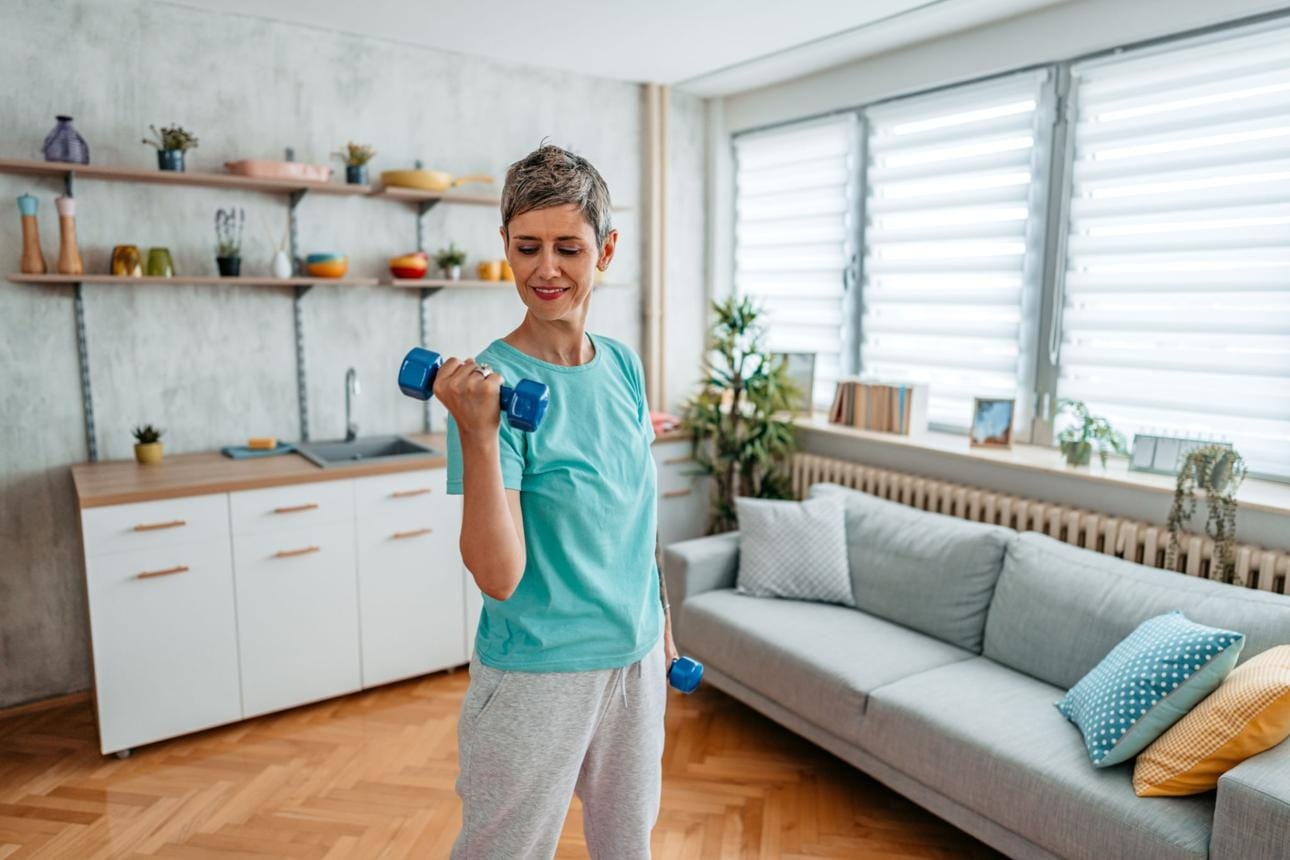
Walking, climbing stairs, dancing, and strength exercises are examples of activities that put healthy amounts of stress on your bones and muscles.
You don't need an intense workout.
A regular walk and a few strength exercises during the week can be a much more sustainable place to begin.
Your bones don't need perfection. They need regular use.
· · ·
Give Your Bones the Building Blocks They Need
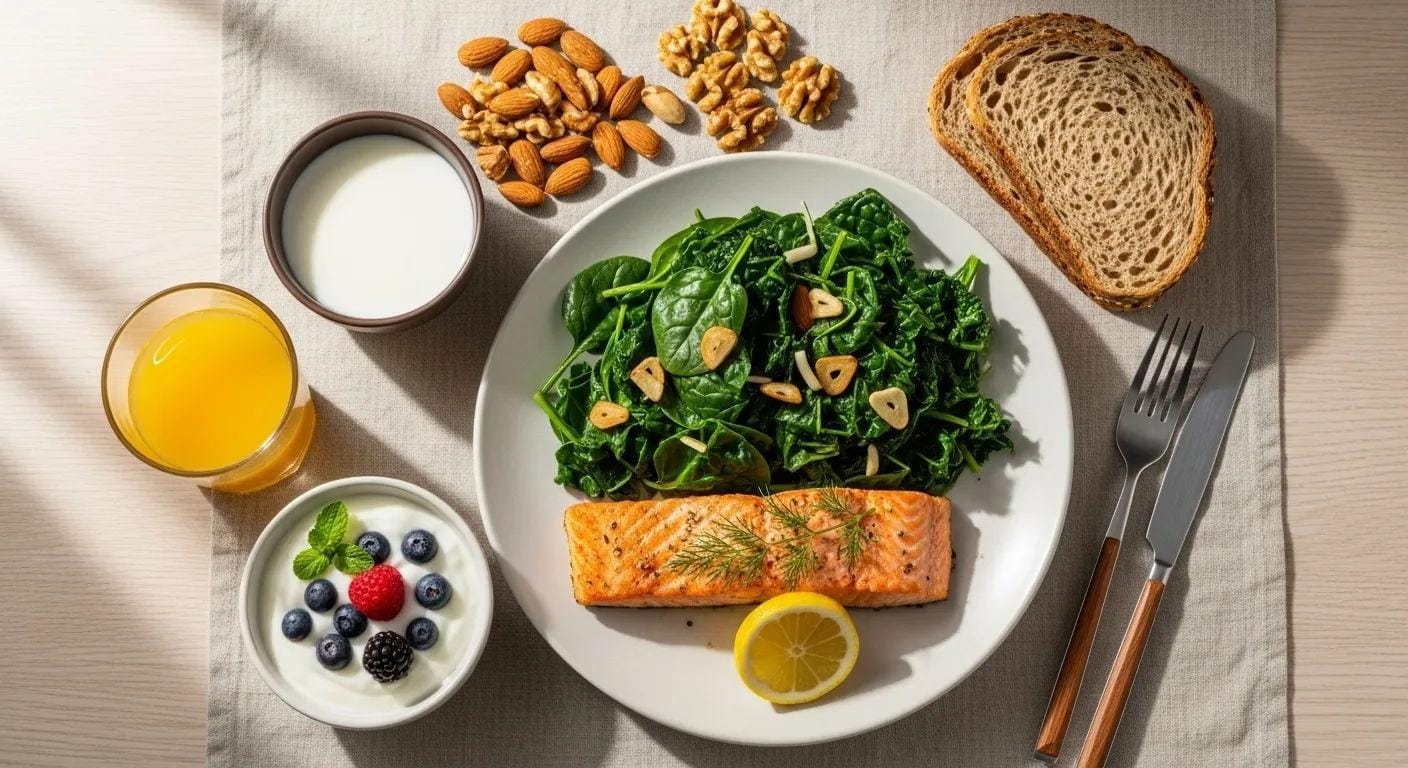
Calcium and vitamin D are important for bone health, while adequate protein supports the body's overall structure and muscle function.
Think about getting calcium from foods such as yogurt, milk or fortified alternatives, leafy greens, tofu, and fish eaten with edible bones.
Vitamin D comes from a combination of food, sunlight, and supplements when appropriate.
Food first is a simple place to start — supplements aren't automatically necessary for everyone.
· · ·
Don't Forget Balance
Strong bones matter, but so does staying on your feet.
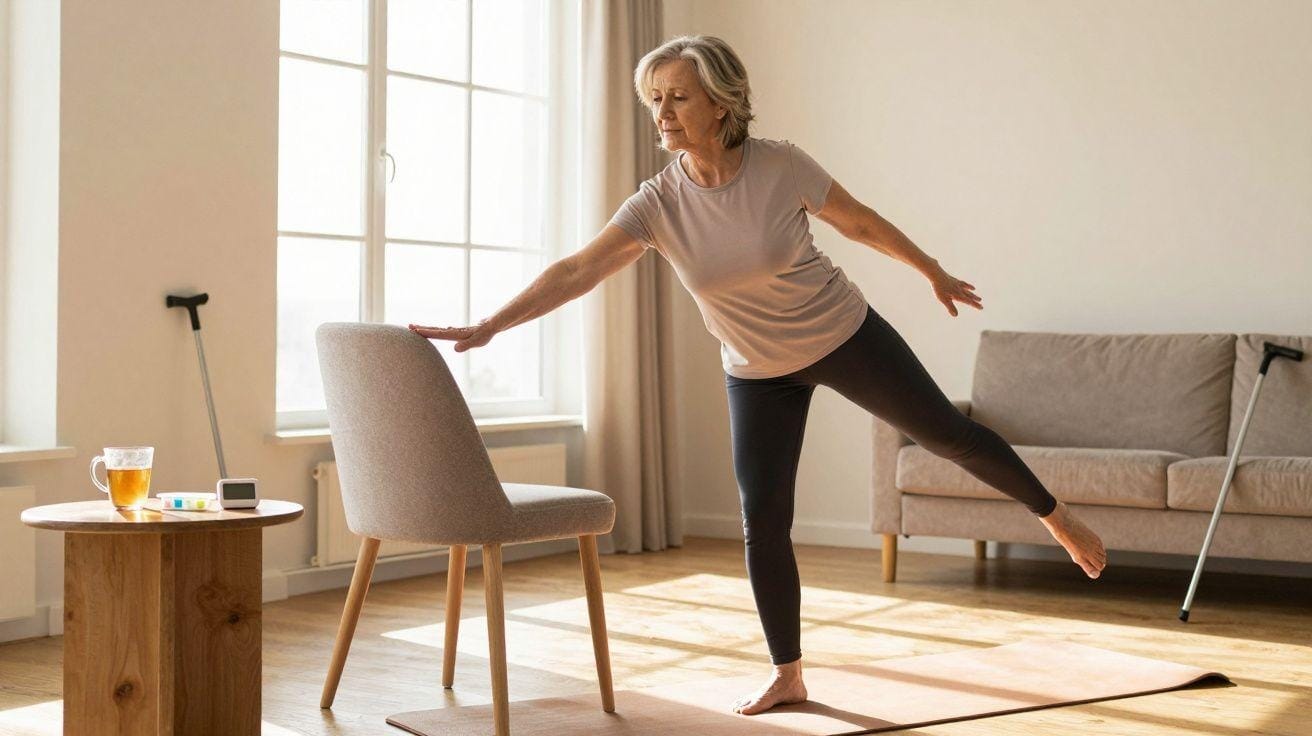
Balance exercises and strength training can help support physical function and reduce the risk of falls.
Try something simple: stand near a sturdy counter and practice shifting your weight from one foot to the other. If you're comfortable, briefly lift one foot while holding the counter for support.
Never sacrifice safety for an exercise.
· · ·
A Few Things That Work Against Bone Health
Smoking, heavy alcohol use, inadequate nutrition, and being significantly underweight can all affect bone health.
You don't need to overhaul your entire life overnight.
Think smaller:
Eat enough. Move regularly. Strengthen your muscles. Don't smoke. Drink moderately if you drink.
And if you're concerned about your bone health, talk with your healthcare professional about your individual risk and whether bone-density testing is appropriate for you.
You can't see your bones getting stronger — but every walk, every strength session, and every nourishing meal is part of supporting the structure that carries you through life.
Your bones may change as you age.
But aging doesn't mean you're powerless.
There are simple, meaningful things you can do to support your bones, muscles, balance, and independence for years to come.
Strong bones aren't about stopping time. They're about giving your body something worth building on.
— The Daily Wellness Guide