
Why Everyone Is Talking About Nervous System Regulation
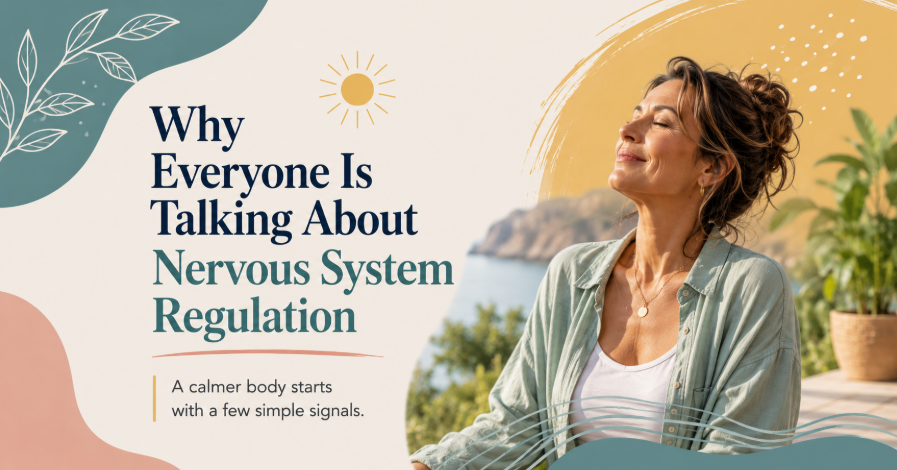
A calmer body starts with a few simple signals.
The wellness world's favorite phrase, in plain English.
You've seen it all over Instagram and every wellness newsletter. Behind the buzzword is something real — and genuinely useful after 50, when stress tends to settle deeper into the body.
The problem was never that you feel stressed. It's that your body rarely gets the signal to stand down.

Your nervous system has two gears: go and rest. The go gear is meant for short bursts — a near-miss in traffic, a hard conversation — and then it's supposed to switch off. But modern life keeps many of us idling in go all day long, and the body reads that constant hum as a threat that never passes. It shows up as shallow sleep, tight shoulders, a racing mind at bedtime, and cortisol that quietly nudges the body to hold onto belly fat.
Regulating simply means helping your body shift back to rest more often. A few reliable ways:
➤ Lengthen your exhale. Breathe in for four, out for six, for one slow minute. A long exhale is the fastest way to tell your body the danger has passed.
➤ Catch early light. Ten minutes of morning daylight helps cortisol rise and fall when it should, which steadies both energy and sleep.
➤ Hum, sing, or gently gargle. Each lightly stimulates the vagus nerve — your body's built-in calm switch.
➤ Walk it off. Gentle movement clears stress chemistry better than sitting with it does.
You can't remove stress from life, and you don't need to. You just need a few dependable ways to come back down — used often enough that your body starts to trust them.
Calm isn't the absence of stress. It's knowing the way back down.
— The Daily Wellness Guide