
The Retinol Trick Women Over 50 Are Trying
A step-by-step guide to using one of skincare’s most studied ingredients — the gentle way.
Retinol is one of the better-studied over-the-counter ingredients for improving the appearance of fine lines, uneven tone, and skin texture. It can also support collagen production and skin-cell turnover over time.
But there's a catch many women discover quickly: retinol can be irritating.
Dryness, peeling, redness, burning, and sensitivity can make an otherwise promising routine feel like a mistake.
The “trick” isn't a secret product.
It's starting gently enough that your skin can actually stick with it.
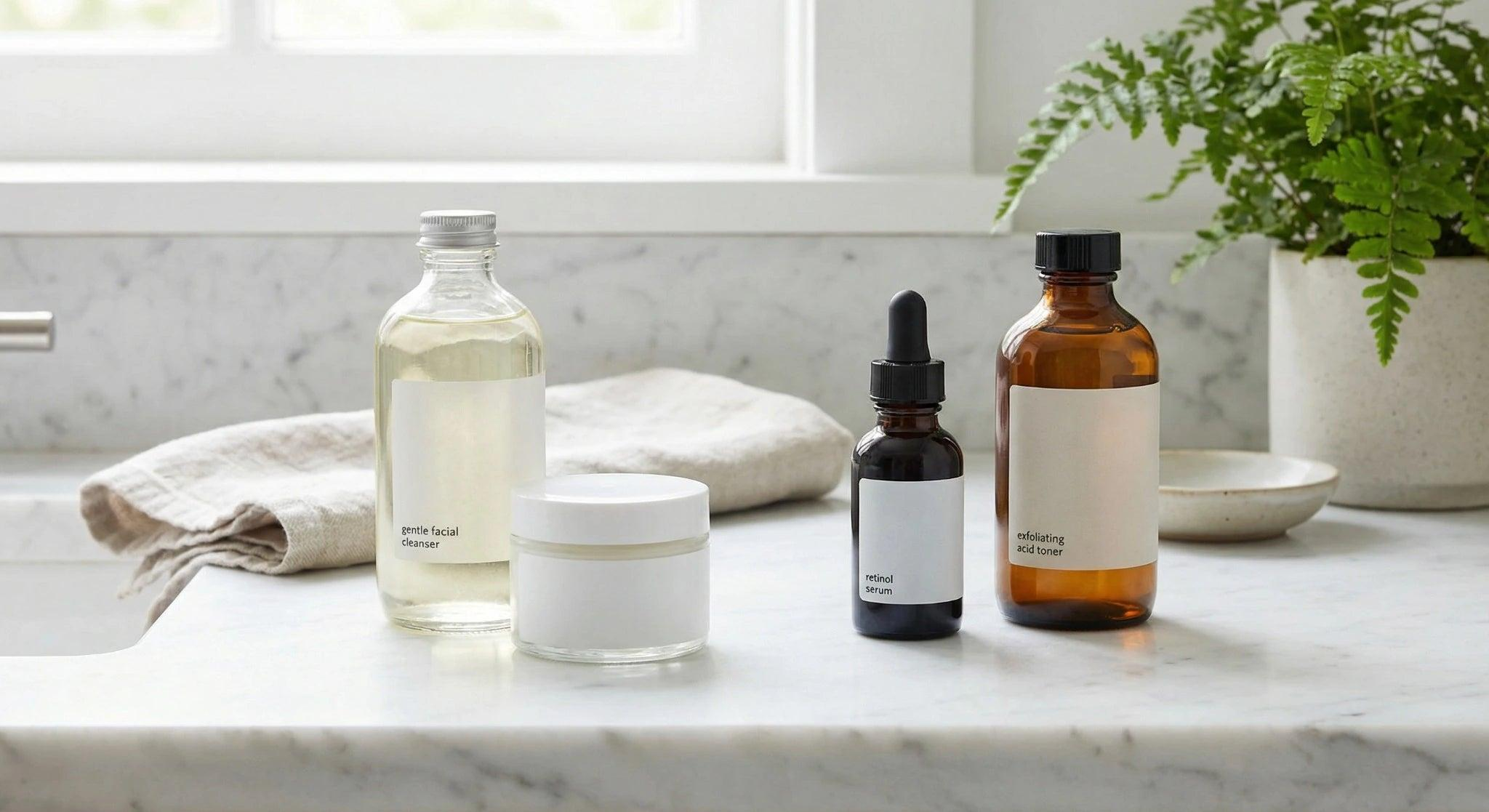
🎯 Step 1: Understand why gentle matters
As skin becomes drier or more sensitive, irritating ingredients can become harder to tolerate.
That doesn't mean everyone over 50 needs to avoid retinol. It means your skin's tolerance matters more than your enthusiasm.
Dermatologists commonly recommend starting with a less-intense retinoid product and increasing use gradually rather than jumping straight into nightly application.
Patience isn't a weakness here.
It's the strategy.
🎯 Step 2: Start low and slow
Begin with a low-strength retinol and use it only occasionally — perhaps once or twice a week to start, depending on the product and your skin.
If your skin remains comfortable, gradually increase frequency over the following weeks.
There's no prize for getting to every night as quickly as possible.
In fact, using too much too soon is one of the easiest ways to end up irritated and abandon the routine altogether.
🎯 Step 3: Use a small amount at night
Follow the product directions, but for many facial retinol products, about a pea-sized amount is enough for the entire face.
Apply it at bedtime after cleansing.
If your skin is easily irritated, make sure it's thoroughly dry before applying. Some dermatology guidance recommends waiting after washing before applying retinol because damp skin can increase irritation for some people.
Keep it away from the eyes, lips, and creases around the nose unless the product specifically says otherwise.
And don't assume more product means better results.
It mostly means more irritation.
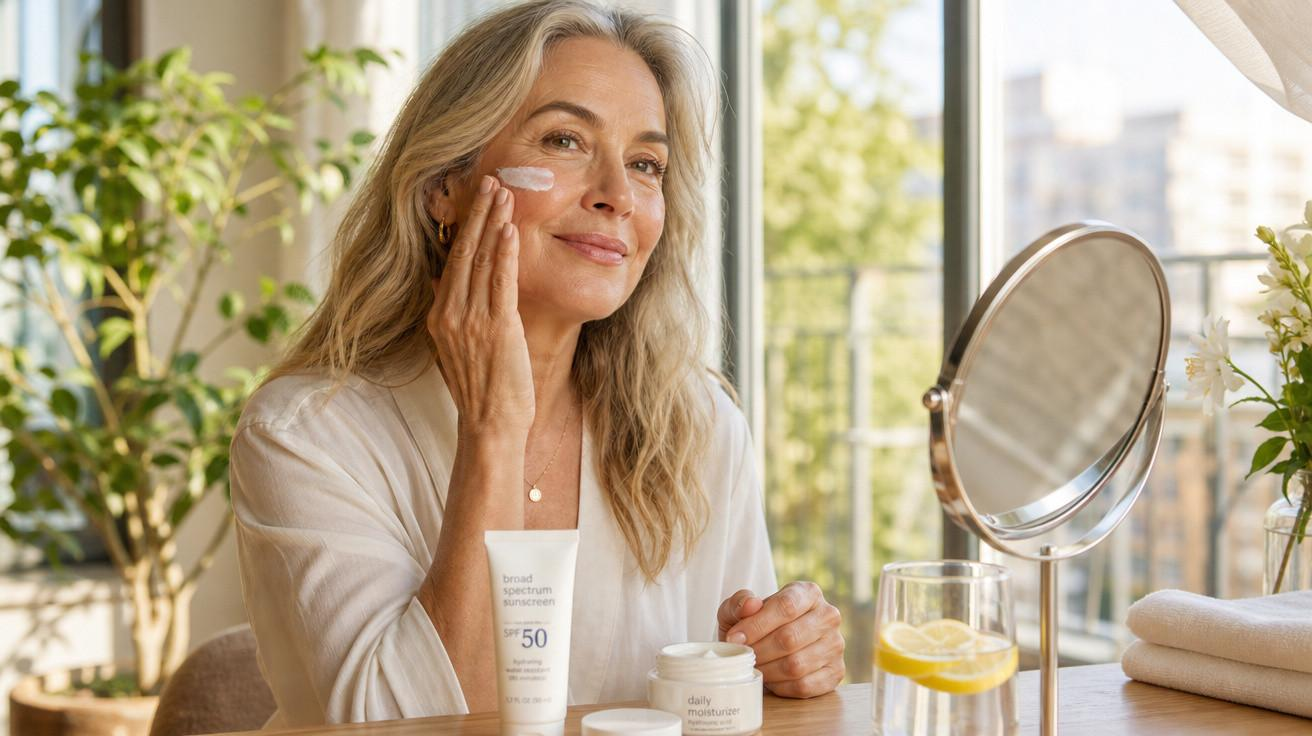
🎯 Step 4: Try the moisturizer “sandwich”
Here's where the gentle technique becomes useful.
If straight retinol feels too drying, try applying moisturizer first, then retinol, followed by another layer of moisturizer.
You can also simply apply retinol and follow with moisturizer.
The goal isn't to make the retinol stronger.
It's to make the routine comfortable enough that you can use it consistently.
For dry or sensitive skin, a simple moisturizer containing ingredients such as ceramides can be especially helpful for supporting the skin barrier.
🎯 Step 5: Make daytime sun protection non-negotiable
This is perhaps the most important companion to any anti-aging skincare routine.
Use a broad-spectrum SPF 30 or higher during the day and use other sun-protective habits, such as shade and protective clothing when appropriate.
Retinol can make skin more sensitive to sunlight, and UV exposure itself contributes substantially to photoaging.
So don't think of sunscreen as something that “undoes” your retinol.
Think of the two as working toward the same goal: protecting your skin while you care for it.
🎯 Step 6: Let your skin set the pace
Retinol isn't an overnight transformation.
Visible improvement can take several weeks to several months, depending on the product and what you're trying to improve.
Some initial dryness or mild peeling can occur.
But persistent burning, significant redness, swelling, soreness, or worsening irritation is not something you need to push through.
Reduce the frequency or stop and let your skin recover. If the reaction continues, check with a dermatologist.
A few important exceptions
Retinol isn't right for everyone.
If you have rosacea, significant skin inflammation, very sensitive skin, or an active skin condition, talk with a dermatologist before starting. There may be gentler or more appropriate options.
And if you're pregnant, trying to become pregnant, or breastfeeding, discuss retinoid use with your healthcare professional rather than starting it on your own.
One more tip: don't introduce several powerful skincare actives at the same time. Adding too many anti-aging products at once can make irritation much more likely and make it impossible to tell which product is causing the problem.
The Gentle Retinol Routine
If you want the simplest version, think:
Low strength → small amount → dry skin → moisturizer → gradual increase → daily sun protection.
That's the “trick.”
Not pushing harder.
Not using more.
Not trying to transform your skin overnight.
Retinol can be a genuinely useful part of a mature-skin routine, but the best routine is the one your skin can comfortably tolerate long enough to benefit from.
Slow and gentle wins here.
— The Daily Wellness Guide