
The Beginner's Guide to Losing Your First 10 Pounds

No crash diets — just a few habits that stack up. · The simple starting point most plans skip.
Meet Carol. She’s 59, recently retired, and had tried just about every diet you can name.
Low-carb plans, calorie counting, meal-replacement shakes—each one worked for a while, but eventually unraveled. The rules became difficult to maintain, life got busy, and the weight slowly returned.
By last spring, Carol was tired of starting over. She didn’t want another strict diet telling her what she could or couldn’t eat. Instead, she decided to focus on four small changes—adding only one new habit every two weeks.
Here’s what the next eight weeks looked like.
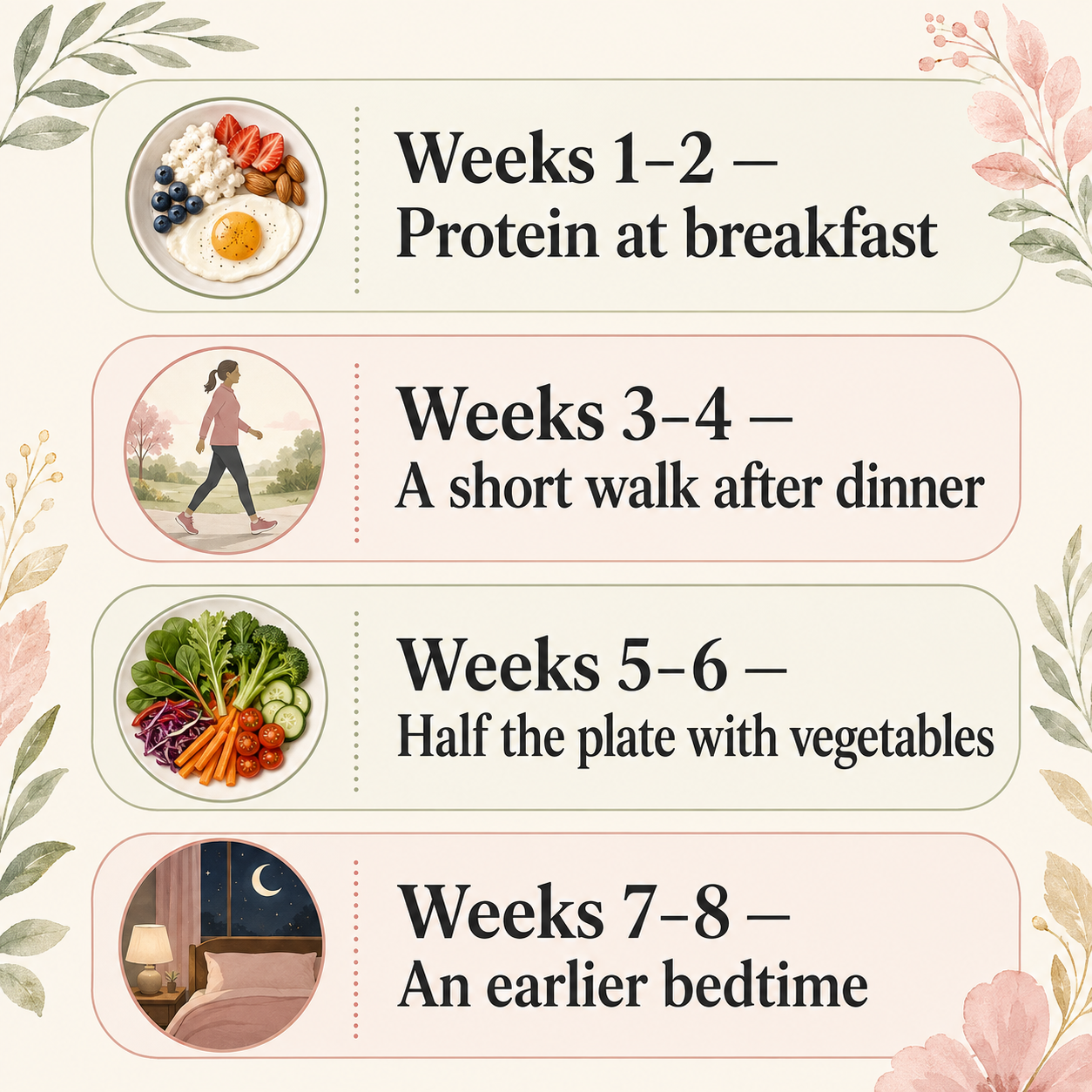
➥ Weeks 1–2 — Protein at breakfast
Carol usually started her morning with toast and coffee. It was quick and familiar, but she often felt hungry again by 10 a.m.
She began choosing breakfasts with more protein, such as eggs with fruit or Greek yogurt with berries. She didn’t change the rest of her meals yet. Within a few days, she noticed that she stayed satisfied longer, and the mid-morning snacking that often derailed her began to fade.
➥ Weeks 3–4 — A short walk after dinner
Next, Carol added a ten-minute walk after dinner on most evenings.
It wasn’t about burning a huge number of calories. The walk simply gave her a new routine during the time she would normally sit in front of the television and snack without thinking. Ten minutes felt manageable, so she didn’t need motivation or a complicated exercise plan to get started.
Some evenings, ten minutes naturally became fifteen or twenty—but ten was always enough.
➥ Weeks 5–6 — Half the plate with vegetables
Carol didn’t ban bread, pasta, dessert, or any of the foods she enjoyed. She simply started filling half her lunch and dinner plates with vegetables before adding everything else.
This helped her eat larger, more satisfying meals while naturally reducing portions of higher-calorie foods. She still enjoyed her favorites, but she found herself less likely to go back for seconds because her meals felt more filling.
➥ Weeks 7–8 — An earlier bedtime
The final change had nothing to do with food.
Carol noticed that after a poor night’s sleep, she felt hungrier and reached for quick snacks more often the following day. She started winding down thirty minutes earlier, putting her phone away, and keeping a more consistent bedtime.
As her sleep improved, her afternoon fatigue and cravings became easier to manage. She wasn’t relying on willpower as much because her body wasn’t constantly asking for extra energy.
Eight weeks later, the scale was down nine pounds. A couple of weeks after that, Carol reached her first ten-pound milestone.
“I wasn’t fighting myself anymore,” she said. “The changes were small enough that they just… stayed.”
That’s the lesson most beginner weight-loss plans miss. You don’t need to overhaul your entire life on Monday. Trying to change everything at once often creates a plan that feels exciting for a week but impossible to maintain.
Start with one change that feels almost too easy. Practice it until it becomes part of your normal routine, then add another.
Your first step could be a protein-rich breakfast, a ten-minute walk, more vegetables with dinner, or an earlier bedtime. The specific habit matters less than your ability to keep doing it.
You don’t need a perfect plan. You need one small change that stays.
— The Daily Wellness Guide