Is "Biohacking" Actually Helpful After 50?
Sorting the genuinely useful from the expensive and gimmicky.
“Biohacking” sounds futuristic—and sometimes a little intimidating.
The term can bring to mind sleep trackers, supplements, cold plunges, elaborate morning routines, and expensive gadgets promising to optimize your body or somehow turn back the clock.
But for women over 50, there's a much simpler way to look at it:
Biohacking is a spectrum.
Some of it is simply healthy living with a trendy new name. Some may be useful in specific circumstances. And some is expensive, extreme, or backed by much more marketing than evidence.
The trick is knowing which is which.

So, what exactly is “biohacking”?
There isn't one universally accepted medical definition of biohacking.
Broadly, it means deliberately changing your habits, environment, or routines in an attempt to improve how your body or mind functions.
That could mean something as simple as getting outside in the morning—or something as elaborate as wearing multiple tracking devices and taking a dozen supplements.
Which is why the label itself doesn't tell you whether something is worthwhile.
Let's sort the popular approaches into three useful categories.
🌿 Bucket 1: The genuinely useful basics
Here's the funny thing about biohacking:
Some of the best “hacks” aren't hacks at all.
Getting regular physical activity, doing strength training, getting enough sleep, eating a varied diet with adequate protein and fiber, getting daylight exposure, managing stress, and staying socially connected are all sensible foundations of good health.
Slow breathing or relaxation practices can also be useful tools for managing stress.
None of these require an expensive subscription or futuristic gadget.
If calling them “biohacking” makes someone finally take their sleep or strength training seriously, that's not necessarily a bad thing.

📱 Bucket 2: Potentially useful—with caveats
Some tools can be helpful depending on the person and the purpose.
A fitness tracker, for example, can encourage you to notice how much you're moving. A sleep tracker may help you spot broad patterns in your bedtime or activity.
But these devices aren't medical-grade crystal balls.
Sleep stages, calorie expenditure, recovery scores, and other metrics are often estimates. A number on your wrist shouldn't automatically override how you actually feel.
Supplements are similar.
A supplement can make sense when there's a genuine nutritional need or deficiency, but “more” isn't automatically better. Vitamin D, for example, can be appropriate for people who don't get enough—but taking large doses without a reason isn't a shortcut to better health.
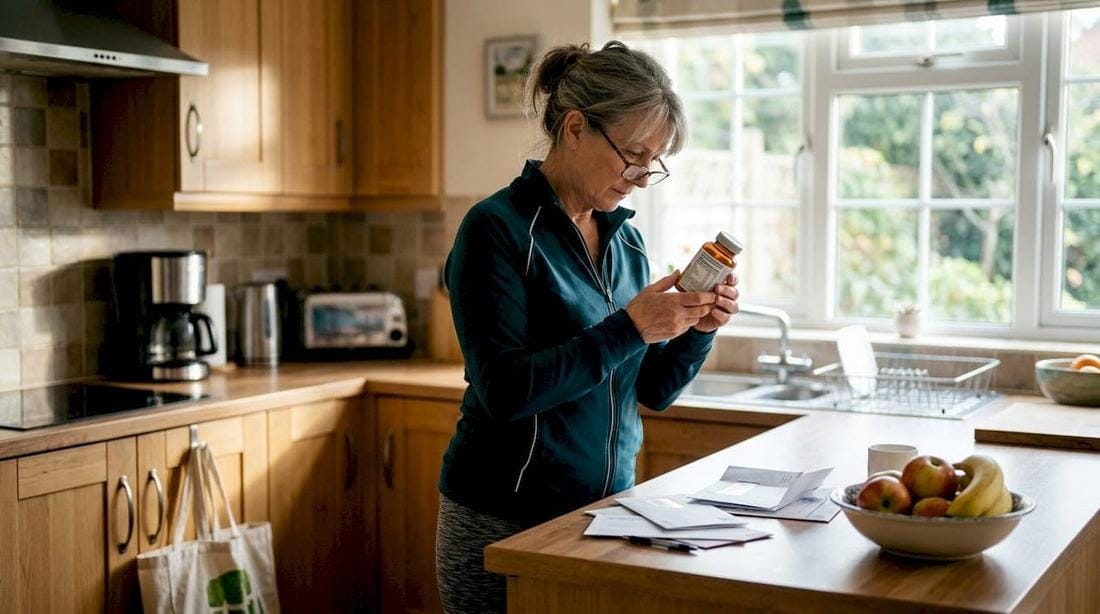
When medications, medical conditions, or significant dietary restrictions are involved, it's sensible to check with a healthcare professional before adding supplements.
⚠️ Bucket 3: The extreme end
This is where a little skepticism becomes useful.
Be cautious with approaches involving:
- Very restrictive diets
- Extreme fasting
- Large supplement “stacks”
- Unproven longevity treatments
- Expensive devices making extraordinary claims
- Extreme cold or heat exposure
- Protocols promising to dramatically reverse aging
The problem isn't that every unconventional practice is automatically harmful.
It's that the bigger the claim, the stronger the evidence should be.
And extreme routines can carry more risk, particularly if you take medications or have an underlying health condition.
💡 A better question to ask
Instead of asking:
“Is this a biohack?”
Try asking:
“What evidence shows this helps, and what does it cost me—in money, time, comfort, or risk?”
That question cuts through a surprising amount of wellness marketing.
A $200 gadget isn't automatically better than a daily walk.
A complicated supplement routine isn't automatically better than eating a varied diet.
And a six-step morning protocol isn't necessarily better than getting enough sleep.
The real “optimization” after 50
The most powerful things you can do for your health aren't particularly futuristic.
They're remarkably ordinary:
Sleep well. Move regularly. Build and maintain strength. Eat nourishing food. Get daylight. Manage stress. Stay connected.
These habits may not look exciting on social media—but they have something that flashy wellness trends often lack:
a much longer track record.
The bottom line
So, is biohacking helpful after 50?
Sometimes—but the label isn't what makes something effective.
The sensible end of biohacking is largely healthy living with a futuristic name.
The gadget-heavy and extreme end deserves more questions, more skepticism, and sometimes professional guidance.
A useful rule of thumb:
Be enthusiastic about the basics. Be curious about new tools. Check the evidence. Be cautious with extremes. Don't confuse a high price with high effectiveness.
You don't need to “hack” your body into wellness.
Sometimes the smartest optimization is simply giving your body the things it has needed all along.
Good sleep. Good food. Movement. Strength. Light. Connection.
No futuristic label required.
“The best wellness tools don't always look impressive. Sometimes they're simply the habits you keep.”
— The Daily Wellness Guide