
Helpful Habits That Help Keep Inflammation in Check
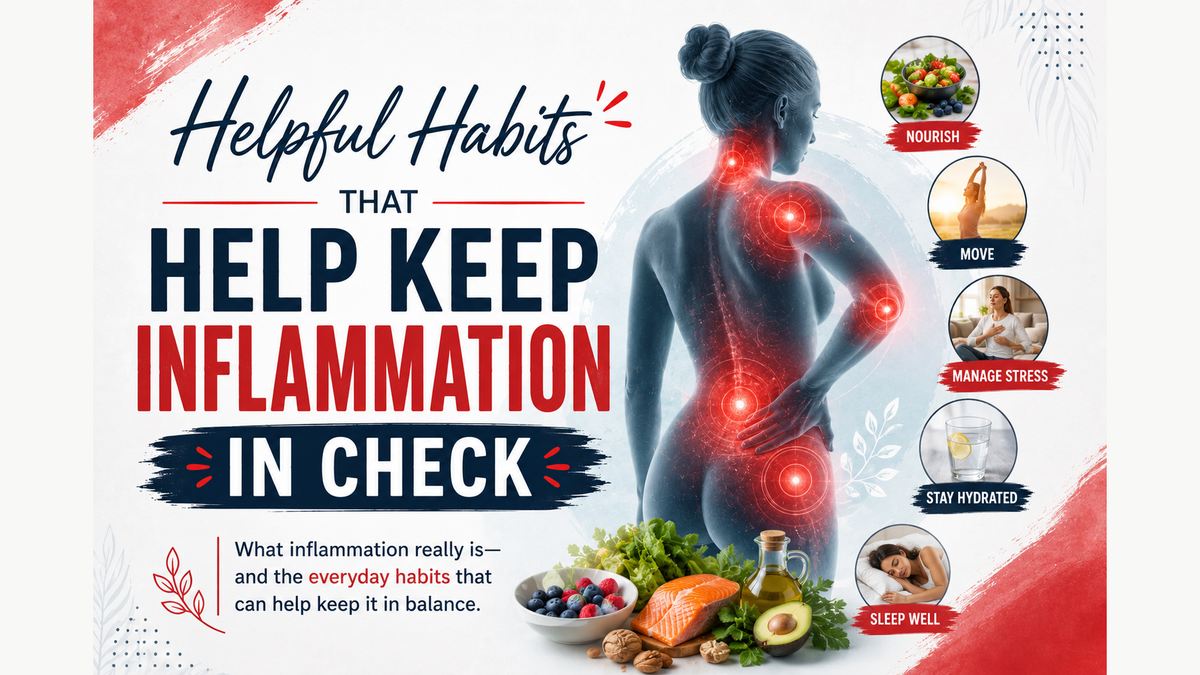
What inflammation really is—and the everyday habits that can help keep it in balance.
The everyday kind of care your body quietly appreciates.
“Inflammation” has become one of those wellness words that seems to appear everywhere.
Foods are advertised as fighting it. Supplements promise to reduce it. Social media posts blame it for everything from tiredness to weight gain.
It's enough to make inflammation sound like something we should eliminate completely.
But here's the important part:
Inflammation isn't automatically bad.
It's actually one of your body's essential protective responses.
When you cut your finger, fight an infection, or injure a muscle, your immune system responds. Inflammation helps protect the affected area and supports the healing process.
That's inflammation doing exactly what it's supposed to do.
The concern is different: chronic, low-grade inflammation that persists over time. Researchers have linked chronic inflammation with a number of health conditions, including cardiovascular disease, type 2 diabetes, and other age-related health problems.
Age, body composition, smoking, diet, physical activity, sleep, chronic health conditions, and other factors can all influence inflammatory processes in the body.
For women over 50, the menopause transition also brings hormonal and metabolic changes that can affect cardiovascular and overall health.
Fortunately, supporting a healthier inflammatory balance doesn't require an “anti-inflammatory cleanse.”
The habits that matter most are surprisingly familiar.
Eat More Color, More Often
There isn't one magical anti-inflammatory food.
A better approach is to look at your overall eating pattern.
Vegetables, fruit, legumes, whole grains, nuts, seeds, olive oil, and fish are all common features of eating patterns associated with better long-term health.
Think berries with breakfast.
Beans added to soup.
Leafy greens with dinner.
A handful of nuts as a snack.
Salmon or another fish you enjoy.
A drizzle of olive oil over vegetables.
You don't need all of these foods at every meal.
And you don't need to suddenly replace everything in your kitchen.
Try thinking in terms of adding rather than restricting.
What could you add to today's plate that came from a plant?
Over time, those small additions can naturally shift the balance of your diet without turning eating into another set of rules.
Move Your Body Regularly
Exercise doesn't need to leave you exhausted to be valuable.
Regular physical activity supports cardiovascular health, metabolic health, muscle, mobility, and healthy aging—and it can also influence inflammatory processes.
A brisk walk counts.
Gardening counts.
Dancing counts.
Strength training counts.
Swimming counts.
A gentle bike ride counts.
Even breaking up long stretches of sitting with a few minutes of movement can be a worthwhile habit.
After 50, strength training deserves particular attention because maintaining muscle supports far more than appearance.
Strong muscles help you climb stairs, carry groceries, protect mobility, maintain independence, and keep doing the things you enjoy.
The goal isn't to punish your body with exercise.
It's to remind your body, regularly, that it was built to move.
Protect Your Sleep

Sleep often gets pushed behind food and exercise in conversations about healthy aging.
It shouldn't.
Sleep is when the body carries out countless processes involved in restoration, immune regulation, memory, metabolism, and overall health.
And when sleep is consistently too short or disrupted, it can affect inflammatory and metabolic processes.
For women going through menopause, good sleep can be particularly challenging. Hot flashes, night sweats, stress, and other changes may make nighttime rest less predictable.
You can't always control how well you sleep.
But you can improve the conditions around it.
Keep your bedroom comfortably cool and dark.
Try to wake at a fairly consistent time.
Get natural light earlier in the day.
Limit late-night stimulation when possible.
And don't dismiss persistent sleep problems as something you simply have to tolerate because you're getting older.
Sleep is health care, too.
Give Stress Somewhere to Go
Stress is unavoidable.
The goal isn't to become someone who never worries, gets frustrated, or feels overwhelmed.
But chronic stress can affect many systems throughout the body, including immune and inflammatory responses.
What helps doesn't have to look like meditation on a mountaintop.
It might be:
A walk after dinner.
Ten quiet minutes with a cup of tea.
Calling a friend who makes you laugh.
Gardening.
Reading.
Stretching.
Listening to music.
Sitting outside without your phone.
Taking a few slow, comfortable breaths.
These moments don't erase the stressful parts of life.
They simply give your body periods when it doesn't have to remain constantly “on.”
And those periods matter.
Don't Overlook the Ordinary Habits
Some of the most powerful health habits aren't exciting enough to become viral wellness trends.
Don't smoke.
Drink alcohol moderately, if at all.
Stay physically active.
Eat plenty of nutrient-rich foods.
Maintain social connections.
Get enough fluids.
Protect your sleep.
Keep up with appropriate medical care.
None comes in beautiful packaging.
But that's precisely the point.
Healthy aging is usually built from ordinary things done consistently, not extraordinary things done occasionally.
Myth vs. Fact: The “Anti-Inflammatory” Trap
MYTH: One special food or supplement can switch inflammation off.
Turmeric shots, green powders, supplements, teas, berries, spices, and countless other products are routinely marketed as “inflammation fighters.”
Some foods and nutrients contain compounds that researchers study for their effects on inflammatory pathways.
But that doesn't mean adding one “superfood” can cancel out everything else happening in your lifestyle.
FACT: Your overall pattern matters much more.
Think about two breakfasts.
One woman takes an expensive wellness shot every morning but regularly sleeps five hours, rarely moves, smokes, and eats very few fruits or vegetables.
Another skips the wellness shot but regularly walks, eats a varied diet rich in plants, doesn't smoke, prioritizes sleep, and stays socially connected.
The second lifestyle isn't as marketable.
But it's much closer to what decades of health research consistently points us toward.
There's rarely one hero ingredient.
The pattern is the point.
What About “Inflammatory Foods”?
This is another place where wellness advice can become unnecessarily frightening.
You'll often see long lists telling you that certain everyday foods are “inflammatory” and should never be eaten again.
Real nutrition is more nuanced.
A slice of cake at a birthday party isn't going to suddenly create chronic inflammation.
Neither is enjoying dessert on Saturday night.
What matters more is what your diet looks like most of the time.
If most of your meals contain vegetables, fruits, whole grains, legumes, healthy fats, and adequate protein, there's room for foods you simply enjoy.
Health doesn't require eating perfectly.
And turning every meal into a test of whether a food is “good” or “inflammatory” can make eating far more stressful than it needs to be.
The Quiet Power of Consistency

Notice what's missing from this newsletter.
There's no detox.
No seven-day cleanse.
No expensive supplement stack.
No food you're forbidden to eat again.
No punishing workout.
That's because the habits associated with better inflammatory and overall health are largely the same habits that support your heart, brain, muscles, bones, sleep, and metabolism.
Eat nourishing foods most of the time.
Move regularly.
Protect your sleep.
Find realistic ways to manage stress.
Avoid smoking.
Stay connected and engaged with life.
None of those habits will transform your health overnight.
But that's not how healthy aging usually works.
Your body responds to patterns repeated over months and years.
One walk won't change everything.
Neither will one salad.
One bad night's sleep won't ruin your health, either.
It's the direction you keep returning to that matters.
Inflammation isn't something you need to fear or fight every day. It's a normal part of a remarkably intelligent immune system.
The goal is simply to create an environment in which that system can do its job without being unnecessarily burdened.
Your body isn't asking for perfection. It's asking for steady care—and the ordinary things often matter more than the trendy ones.
— The Daily Wellness Guide