
Does Red Light Therapy Really Work at 50?
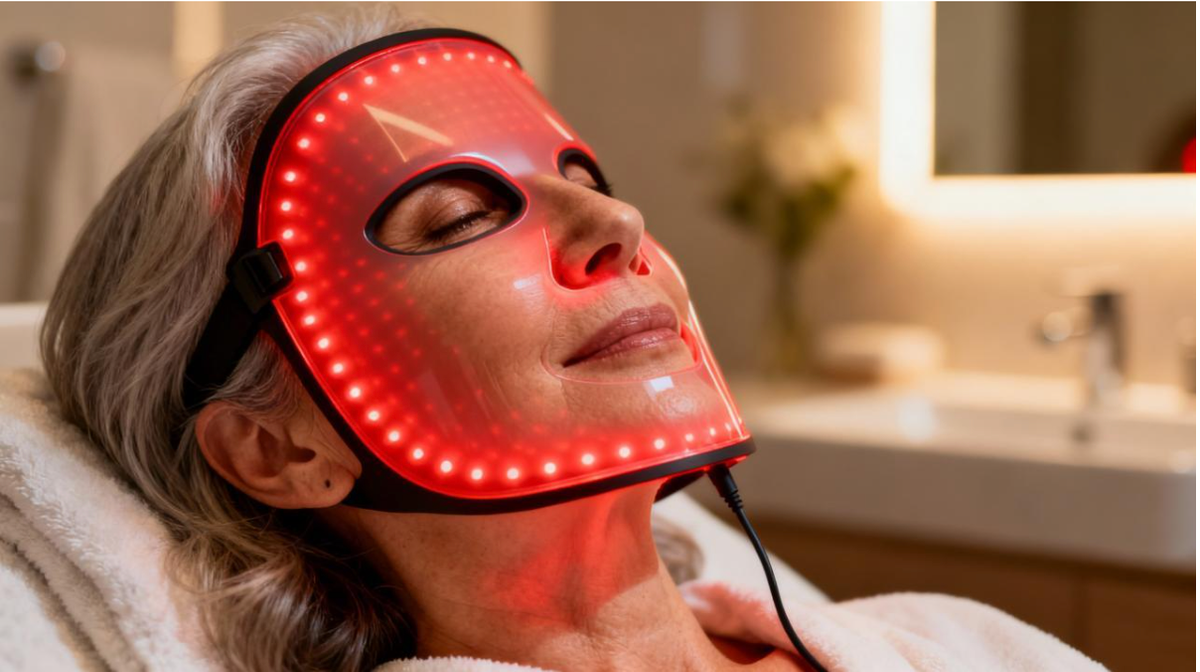
Separating the genuine science from the glowing hype.
Separating the genuine science from the glowing hype.
Red light therapy is having a real moment — glowing masks, panels, and handheld devices promising firmer-looking skin, less pain, and even better sleep.
The devices aren't always cheap, and the claims can be enormous. So it's fair to ask: does this actually work, especially for women over 50?
The honest answer is a nuanced one: there is some promising evidence, but the benefits depend on what you're hoping to treat.
Let's separate the science from the hype.
Q: What is red light therapy?
Red light therapy uses specific wavelengths of red or near-infrared light directed at the body.
Unlike tanning beds, it doesn't rely on ultraviolet (UV) radiation. The light is thought to interact with cells in ways that may influence cellular activity and tissue repair.
At-home devices include masks, panels, and handheld gadgets, while healthcare professionals may use more powerful equipment in clinical settings.
Q: Does it really help your skin?
This is one of the more promising areas of research.
Some studies suggest red light therapy may modestly improve the appearance of fine lines, skin texture, and overall skin quality, possibly by influencing collagen and other processes in the skin.
But the results aren't dramatic or guaranteed.
Think gradual and subtle, rather than a face-lift in a glowing mask.
And the quality, wavelength, dose, and frequency of devices can vary considerably, which makes it difficult to compare every product on the market.
Q: What about pain, joints, or hair?
This is where it's especially important to keep expectations realistic.
Photobiomodulation — the broader term often used for red and near-infrared light treatments — has been studied for certain types of pain, inflammation, recovery, and hair loss.
Some applications look promising, but the evidence isn't equally strong for every condition.
Promising doesn't mean proven for everyone.
Q: Are home devices as good as professional treatments?
Not necessarily.
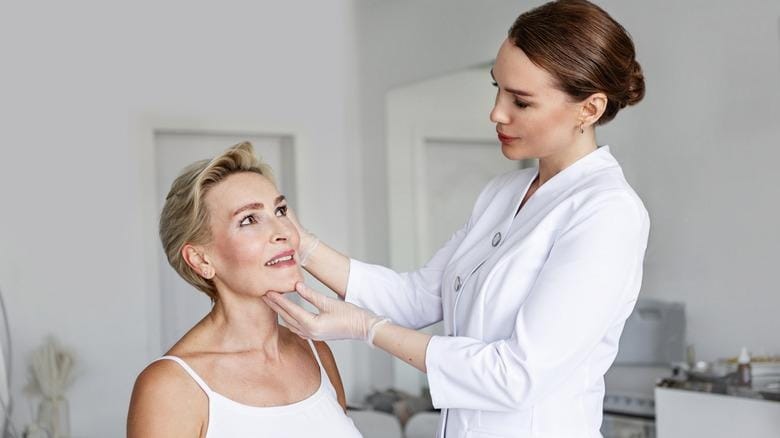
Professional equipment may deliver different levels of light and may be used under controlled conditions. Home devices vary widely in design and specifications.
And more powerful doesn't automatically mean better.
If you buy one, follow the manufacturer's instructions carefully rather than assuming longer or stronger sessions will produce faster results.
Q: Is it safe?
For many people, red light therapy appears to be relatively low-risk when used properly.
Still, low-risk doesn't mean risk-free or suitable for everyone.
Follow the device's eye-protection instructions, don't exceed recommended use, and speak with a healthcare professional if you have a condition that makes you sensitive to light or take medications that increase photosensitivity.
If you're treating a medical problem rather than simply using it as a cosmetic routine, professional guidance is particularly worthwhile.
· · ·
So, is it worth it after 50?
Maybe.
If you're interested in improving the appearance of your skin, enjoy the routine, have realistic expectations, and can comfortably afford a quality device, red light therapy may be a reasonable nice-to-have.
But it shouldn't replace the basics.
Daily sun protection, not smoking, good nutrition, adequate sleep, and regular movement have a much stronger place in your overall health routine.
And if a glowing mask costs more than you're comfortable spending, you aren't missing a secret ingredient to healthy aging.
· · ·
The honest takeaway
Red light therapy isn't pure nonsense — there is legitimate research behind photobiomodulation and some potentially useful applications.
But it's also not a miracle cure hiding in a $300 mask.
Think of it as an optional extra rather than an essential part of your wellness routine.
The best wellness investment isn't always the newest gadget. Sometimes it's simply knowing what deserves your money — and what doesn't.
— The Daily Wellness Guide